
Leading Through Change: Reflecting on the Shifting Landscape of Library Residency Programs
By Beatrice Downey, Outgoing Convener; Courtney Shareef, Convener; and Natalia Umaña, Incoming Convener
With the recent rise of anti-DEI legislation across state and federal levels came the sunsetting of many initiatives intended to increase underrepresented demographics in various industries, including academia, business, STEM, and more. As early as 2024, resident librarians worried about the longevity of diversity residency and fellowship programs, which were designed to recruit and train BIPOC librarians. During the 2025-2026 academic year, we authors, Conveners of the Association of College & Research Libraries (ACRL) Residency Interest Group (RIG), confirmed what others suspected: a large number of library residency and fellowship programs were ending or pausing their programs. As the leaders of RIG, this news elicited complex reactions: we felt disheartened and considered the various challenges this presented to our group. We asked ourselves and members of the interest group many questions: Why are library residency programs disappearing? Did these institutions divest in their professed values and commitments to early career librarians and diversifying the field that undergirded these programs? If not, what are they doing instead? What can we as RIG do to continue supporting the few residents that are still out there? How can we sustain our interest group without a steady number of new, incoming residents?
The last question (how can we sustain our interest group without a steady number of new, incoming residents?) is the most dire for RIG. Established in 2008, RIG’s four-pronged mission aims to “support current and former residents to network, share their expertise, gain national leadership and service experience, and prepare for transitioning to post-residency positions” (Free, 2008; Residency Interest Group, 2026a). In order to sustain interest group status with ACRL, we must have three members on the convener team, rotating in a new incoming convener and rotating out the outgoing convener in July of each year. Though current members serve on RIG teams, including New Members and Mentorship, Programs, Social Media and Web Communications, they often hesitate to make the three-year voluntary leadership commitment. This academic year’s Convenor Team is composed entirely of former residents. Former residents also make up the majority of RIG’s current teams. With so many institutions ending or pausing their programs, we don’t have an influx of new residents to serve within RIG teams, let alone lead it.
It has long been difficult for RIG to recruit incoming conveners for our interest group. Most library residency programs last between two and three years and do not guarantee a permanent position at their conclusion. Given the uncertainty this causes for their professional future, most residents prefer to exert their effort in gaining meaningful work, research, and scholarship experience to enhance their resumes and CVs. They also typically spend the final year or two of their residency searching and applying for permanent positions.
As RIG’s Conveners, this year we decided to take several actions to understand and support residents through the changing landscape of library resident programs. First, we tracked the number of residency programs who had recent or current residents to see how many were pausing or ending. We then brought our concerns to RIG members and proposed an alternative to our current interest group that could help maintain volunteers and gain more interest in future leaders of the group. Lastly, we developed a program series to encourage current and former residents to take the pulse of residency efforts, document ongoing work, and capture a snapshot of library residency programs.
Residency program tracking
Library residency programs are post-degree work experiences designed as an entry-level program for recent MLS graduates. Residency programs are different from internships, which are for the pre-professional (Pre-MLS) work experience during a graduate program, preceding the terminal degree. There are also fellowships, that are experiences designed to assist librarians, who already have some professional experience, in developing an area of expertise or managerial skills (Residency Interest Group, 2026b). Library residency programs have existed for over 60 years, with the Library of Congress and the National Library of Medicine among the oldest (Brewer, 1997). The earliest known diversity residency program—the Pauline A. Young Residency established at the University of Delaware in 1984 (About the Program – Pauline A. Young Residency, 2023).
Table 1: Internships, Residencies, and Fellowships in Academic Libraries
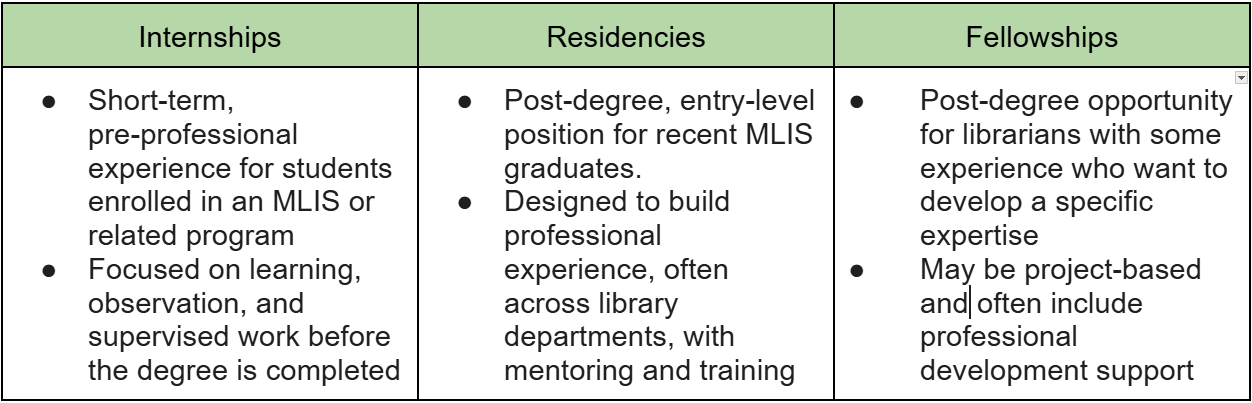
During the 2025-2026 academic year, RIG had several volunteers who rolled off of our group as they have accepted permanent positions and moved on to other service opportunities in librarianship. This situation is typical for our group. The difference is that many of the volunteers rolling off let us know that their residency program was ending or pausing (with no definitive restart date) and would not have a new resident(s) for us to contact about joining RIG. We heard it so often that we decided to track the current programs and institutions that previously had programs as well. We were able to confirm that there were 35 library residency or fellowship programs (across 35 different institutions) in the United States that had active residents or fellows between 2022-2025. Of the 35 institutions with library residency programs, we confirmed that 20 no longer have an active resident, have announced they are not continuing their program (in some cases after the current resident(s) leave), or have paused their program with no return date.
ACRL’s Diversity Alliance (DA), an initiative that aims to “unite academic libraries committed to increasing the hiring pipeline of qualified and talented individuals from underrepresented racial and ethnic groups”, has maintained an online membership list since 2017. Between then and 2025, more than 100 institutions served as members (see Table 2 for membership count by year) (ALA, 2016). We cannot confirm how many of these institutions once had residency or fellowship programs. But members were expected to establish paid early-career diversity residency positions and graduate-student practicums, among other goals and commitments.
Table 2: ACRL Diversity Alliance Membership Count by Year

Our possible interest group change
In line with the dramatic reduction in residency programs we found as part of our tracking work, some of us are facing very real, front-of-mind challenges that further the precarity of RIG: new institutional policies prohibiting work related to diversity, equity, and inclusion (DEI). These restrictions represent institutional actions in response to recent legislation and current federal administration directives interpreting DEI as discriminatory and illegal; for an in-depth examination of these issues, we recommend the detailed analysis in Gong & Vong (2025).
Since the onset of residency programs (see Boise & Dowell, 1987), many have been designed for early-career librarians, particularly those from historically underrepresented groups, a trend further solidified by RIG’s liaison relationship with the Diversity Alliance. While membership in RIG is open to anyone interested in residency programs regardless of personal social identity/ies, this history has meant that many of RIG’s offerings and contributions have explicitly addressed the needs of librarians of color and LGBTQ+ librarians, often created by members of those communities. For RIG members currently employed in libraries who have instituted these types of policies, engaging in DEI work in their official capacity is now explicitly prohibited and could lead to severe consequences impacting their job security. RIG’s charge to support former and current residents warrants that we consider ways we may need to shift to prevent these harms.
How to pivot
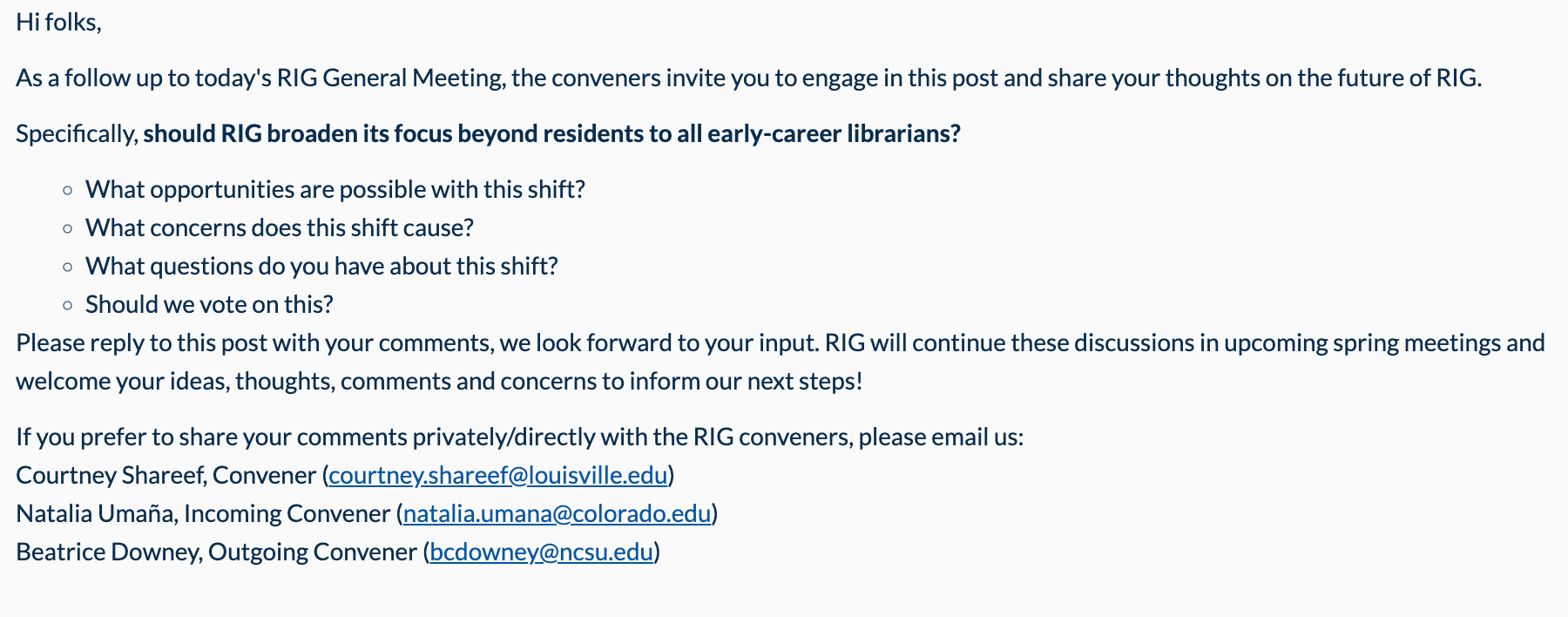
As the Leadership Team discussed these tremendous challenges impacting RIG, Outgoing Convener Beatrice Downey had one-on-one discussions with various current and recent former residents about the state of their programs. Through these discussions the idea was brought forward from RIG members about evolving into an “early career” interest group, to maintain our membership. In February 2025, we Conveners brought this to a general meeting for further discussion and member input, with an ongoing, open call for comments on this possibility via RIG’s Connect space (See Image 1 for member discussion board through ACRL):
Image 1: Request for feedback on possible interest group change
RIG’s charge to support current and former residents through “inter-collegiate collaboration, creating programming and resources, [and] advocacy”, among others, lends itself well for addressing the needs and interests of librarians new to the profession. In a scoping review discussing support for early career librarians, Smith et al. (2025) found that residency programs predominate the literature on professional development initiatives for this population. While themes span program design and impact, resident experiences, and case studies, professional development is discussed extensively at varying levels. This abundant scholarly focus mirrors not only our experience as members of RIG who have designed and implemented various programs and resources in our years of service, but the documentation of past efforts of the group since its origin: mentorship initiatives, community building opportunities, skill building workshops, research support and collaboration, and comprehensive resource development such as the robust Diversity Residency Toolkit (Adolpho et al., 2021), which is utilized across institutions. These directly address the evidence discussed by Smith et al. (2025) that early career librarians: 1) rely on professional affiliations for support and development in addition to their institution-specific offerings; and 2) are often directly involved in planning and delivering professional development. RIG has been a community intent on working with the ethos “for us, by us,” ripe for broadening its support for all early-career librarians, not just residents.
As Conveners, we ruminate on this possible change as a solution to mitigate dwindling resident numbers and restrictions on DEI work. We hold difficult questions about what it may mean for a space that, in our personal experiences, served as a unique community, offered networking among diverse librarians across North America, allowed us to talk frankly about our experiences, and validated our whole selves as legitimate players in the field of academic libraries. We anticipate that RIG’s deliberations on making this change will include investigating existing offerings for early career librarians, considering what we may gain or lose in opening the group’s scope beyond the experiences of library residents, and whether these possibilities outweigh the precarity we face of losing ACRL interest group status completely.
RIG Show & Share series
In the summer of 2024, several residency coordinators planned a regional Librarian Resident Summit hosted by the University of Virginia (UVA) Libraries. With the theme “Connect, Amplify, Spotlight,” the summit aimed to provide resident librarians from programs along the East Coast—including Virginia Tech, North Carolina State University, Washington and Lee University, Duke University, American University, and the University of North Carolina at Charlotte —a space for connection, opportunity, and professional development” (Brown, 2024).
Beatrice, then Convener of RIG, was among the summit attendees. During the one-day summit, the residents were given the opportunity to connect on their own, without residency coordinators present. “We chatted about many things,” Beatrice recalled. “But one thing that stuck out was that some residents felt like their institutions were not interested in their role or the work that they were doing. From there, the idea for the RIG Show & Share was born.”
She took the idea of a Show & Share back to the rest of the RIG Conveners— a RIG-hosted space where residents could showcase their projects and research and share their residency experiences with other resident librarians. RIG members were receptive, but lacked capacity in Fall 2024 to bring the idea to fruition.
Despite, or maybe because of, more vocal attacks on diversity, equity, and inclusive efforts in higher education, the Show & Share idea picked up steam in 2025. Residents wanted an opportunity to showcase their skills and professional development. As programs sunsetted across the country, they also desired more opportunities to connect and collaborate with one another.
In Summer 2025, the 2025-2026 RIG Convening Team met with the DA’s Incoming Chair, Regina Gong, and Vice Chair Silvia Vong. From that discussion, RIG learned that the Alliance might be able to request and receive funding from ACRL on RIG’s behalf to support a Show & Share virtual summit. Although RIG’s leadership worked with the Alliance throughout Fall 2025 to draft a Board Action Form for the ACRL Board, we ultimately decided to rescind the proposal after being asked to consider changes that ran counter to our initial aims and intentions for the Show & Share.
The RIG leadership team decided to pivot our efforts towards providing the space residents requested of us: one where they could network with current and former residents while also showcasing its work. We formed a planning team of RIG members, including Cas Saroza of NC State University and Natasha Griffin of American University (as well as the leadership team), and immediately began manifesting the Show & Share.
With the theme “Change & Transition: The Shifting Library Landscape,” what was once envisioned as a one-day virtual conference has transformed into a weekly summer series. Thanks to support from Virginia Tech’s Residency Program Coordinators, Eric Glenn and Roberto Silva, who reached out to us upon learning of our proposal’s retraction, the series will kick off on Friday, May 29, at 1:00 p.m. EST with a keynote address by former resident Mark A. Puente, who currently serves as Associate Dean of Organizational Development Administration at Purdue University. Current and former residents will facilitate sessions on a variety of topics over the summer, including: mentorship during and after the residency; strategies for retaining early-career librarians; insights into the post-residency transition to permanent positions; and more.
Looking towards the future
While the library residency program landscape looks bleak at the moment, we remain hopeful and optimistic for the future. There are many things in the works that we believe will positively impact RIG and the broader residency program outlook. Up to two RIG members have always served as a liaison to ACRL’s Diversity Alliance (DA). Over the last year, the DA has been planning to restructure itself. They are currently submitting a name and mission change (with input from RIG members and the community at large) to the ACRL Board, which we believe will help institutions that want to create, recreate, and sustain library residency programs. We hope that with the new name and mission, the DA and RIG will be more closely aligned, creating more opportunities for collaboration and resource sharing for the benefit of early-career librarians seeking a residency experience. We have also been made aware that some library resident positions now use different titles, such as “Visiting Librarian/Professor,” which may be connected to legislation against DEI policies, as many previous residents had “diversity” included in their titles. As previously stated, one of the most difficult things for us as Conveners is recruiting a new Incoming Convener every year for a 3-year term. We are excited to announce that we are currently in the midst of confirming and onboarding RIG’s next Incoming Convener! Lastly, we are marketing and making final preparations for the Show & Share series, which we hope will raise awareness of the disappearance of residency programs to a wider audience. We hope to see you at the presentations for RIG’s first Show & Share this summer! Please register for the Show & Share by visiting https://go.ncsu.edu/rig-show-and-share-registration.
References
Adolpho, K., Bergamasco, M., Corral, A., Peralta, M., Rawls, M., Tadena, L., & Tavernier, W.
(2021). Diversity residency toolkit. ACRL Residency Interest Group. https://doi.org/10.5967/egje-kw85
American Library Association (ALA). (2016, September 22). ACRL Diversity Alliance. Association of College & Research Libraries (ACRL). https://www.ala.org/acrl/issues/diversityalliance
Boisse, J. A., & Dowell, C. V. (1987). Increasing minority librarians in academic research
libraries. Library Journal, 112(7), 52–54.
Brewer, J. (1997). Post-Master’s residency programs: Enhancing the development of new professionals and minority recruitment in academic and research libraries. College & Research Libraries News, 58(6), https://doi.org/https://doi.org/10.5860/crl.58.6.528
Free, D. (2008). ACRL launches interest groups. College & Research Libraries News. https://research.ebsco.com/linkprocessor/plink?id=71c600d3-5c3b-3330-b353-29fd0a966ef9
Residency Interest Group. (2026a). About Us. ACRL Residency Interest Group. https://acrlrig.my.canva.site/about-us
Residency Interest Group. (2026b). Library residency programs: What are library residency programs? (2026). Residency Programs. https://acrlrig.my.canva.site/residency-programs
Smith, S., Baird, L., Burton, K., McLeod, A., Carroll, S., & Holt, A. (2025). Supporting early career academic librarians: A scoping review of research literature on early career professional development initiatives. The Journal of Academic Librarianship, 51(4). https://doi.org/10.1016/j.acalib.2025.103069
Gong, R., & Vong, S. (2025). “DEI is unlawful”: Examining academic libraries’ response as
institutional isomorphism. The Political Librarian, 8(2). https://journals.library.wustl.edu/pollib/article/id/9144/
University of Delaware. (2023, October 17). About the program – Pauline A. Young Residency. UD Library, Museums and Press. https://library.udel.edu/residency/program/
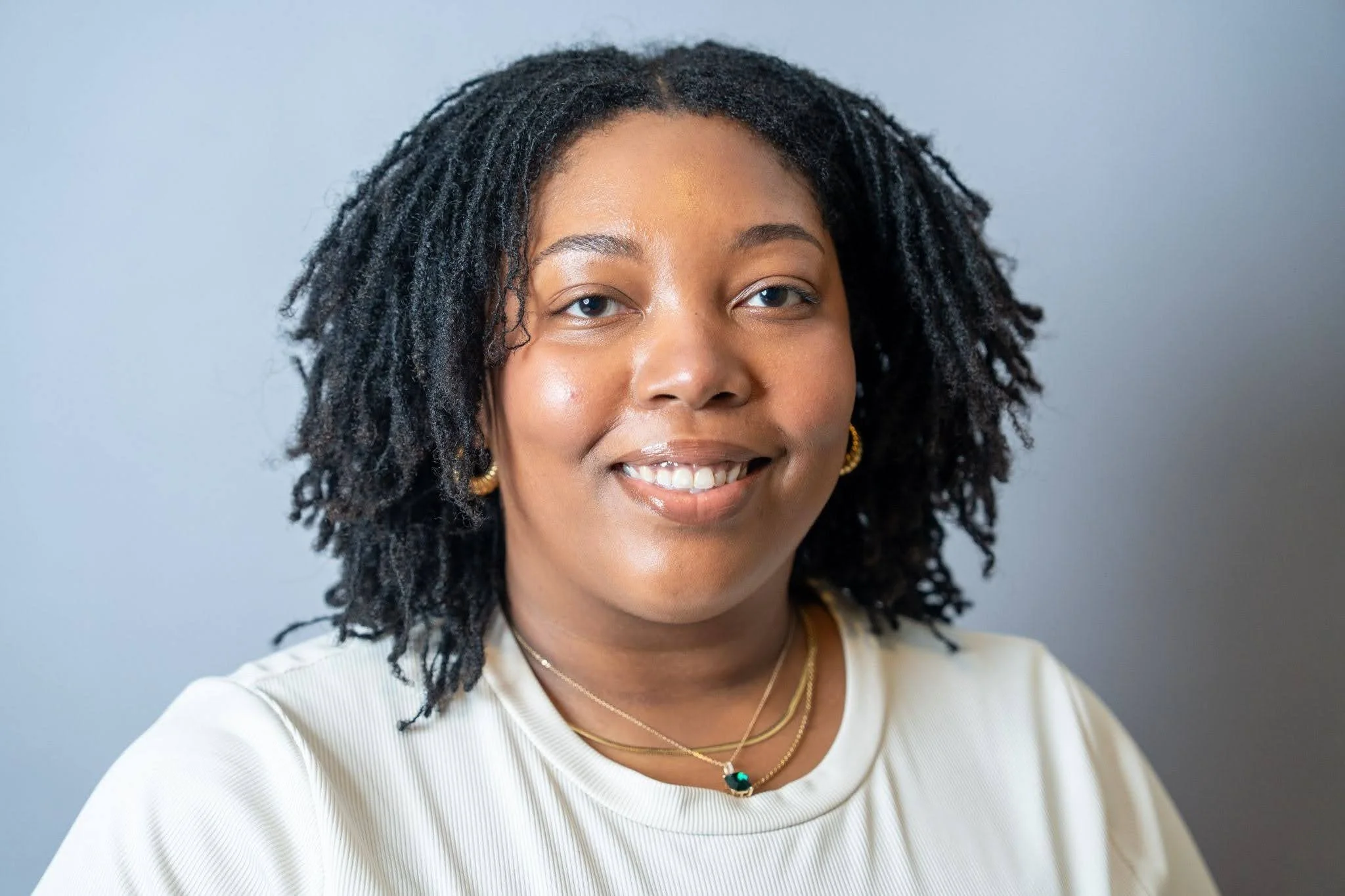
Beatrice (Bea) Downey (she/her)
is an early career librarian at NC State University Libraries. In her role as User Experience Librarian she specializes in content strategy, user research, and assessment. She was previously a 2022-25 NC State University Libraries Fellow. She is a 2021 Spectrum Scholar and serves as ACRL’s Residency Interest Group’s Outgoing Convener and Chair of the Social Media & Web Communications Team. Beatrice holds a Masters in Library Science from Texas Woman’s University and Bachelor of Arts in political science from Christopher Newport University.
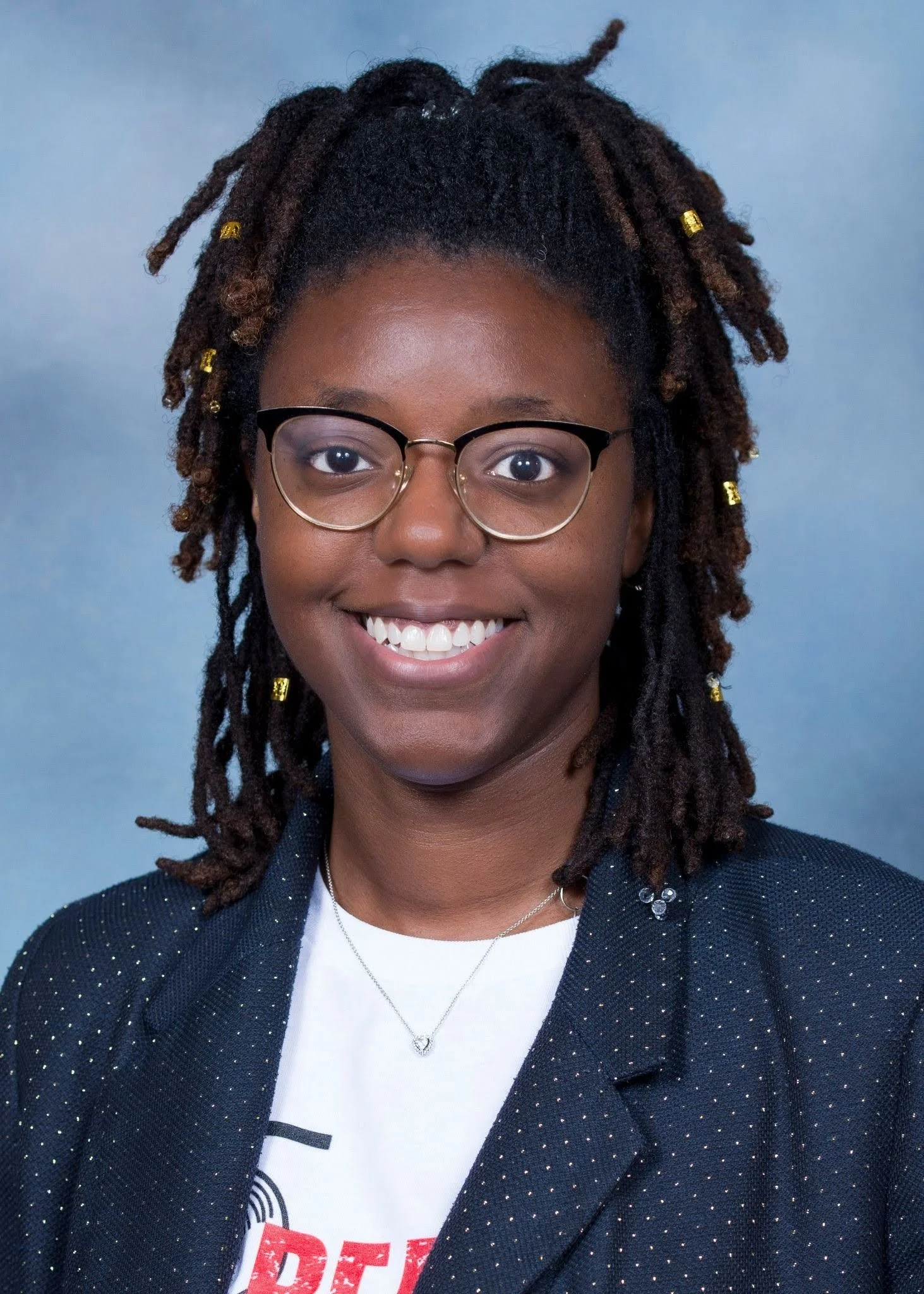
Courtney Shareef (she/her)
is the Strategic Research Initiatives Librarian at the University of Louisville Libraries and co-leads Ekstrom Library’s Scholar Services. This suite of signature services fosters collaborative and embedded research relationships between librarians and campus researchers. She is also the librarian liaison to the College of Education and Human Development. Courtney is a member of the 2024-2025 cohort of the Institute for Research Design in Librarianship, and a 2023-2024 ACRL Diversity Alliance resident librarian at UofL.
Natalia Umaña (she/her)
is an assistant professor and the Education Librarian at the University of Colorado Boulder. Her academic librarianship journey began as a resident at the University of Denver 2022-2025 after working as a bilingual primary educator in Texas. She works with students, faculty, and researchers in the subject areas of Education and Children’s and Young Adult Literature. Her research interests encompass critical information literacy, evidence synthesis methodology, and K-12 education.